
Article: The Cocoa Plant: History, Fruit, Cultivation and Interesting Facts

The Cocoa Plant: History, Fruit, Cultivation and Interesting Facts
The Cocoa Plant: History, Fruit and Cultivation
The cocoa plant, whose scientific name is Theobroma cacao, has an ancient history filled with fascinating facts and mystery. Its many interesting gastronomic properties, and its wider uses, have contributed to its enduring appeal.
The plant produces a fruit containing seeds, also known as cocoa beans. These seeds are highly valuable because they are the raw material used to make chocolate, known in ancient times as the “gold of the Maya.”
The Origin and Spread of the Cocoa Plant
According to Focus, documented evidence of cocoa tree domestication dates back more than 5,300 years in South America. These findings can be traced to southern Ecuador and are associated with the Nacional variety.
Cocoa cultivation later spread considerably throughout Mesoamerica, first among the Olmec people, who used the plant for therapeutic and medicinal purposes, and later among the Maya and Aztecs, who consumed cocoa as a sacred beverage.
Following the arrival of Christopher Columbus and the discovery of America, as well as the subsequent initiatives of Hernan Cortes, cacao beans reached Spain as early as around 1525. From there, cocoa gradually spread throughout the world.
The oldest lineages of the cocoa plant, although not used by humans, may date back as far as the Middle Eocene. According to the University of Bolzano, this geological period occurred between 48.6 and 40.4 million years ago.
The Cocoa Fruit and Its Beans
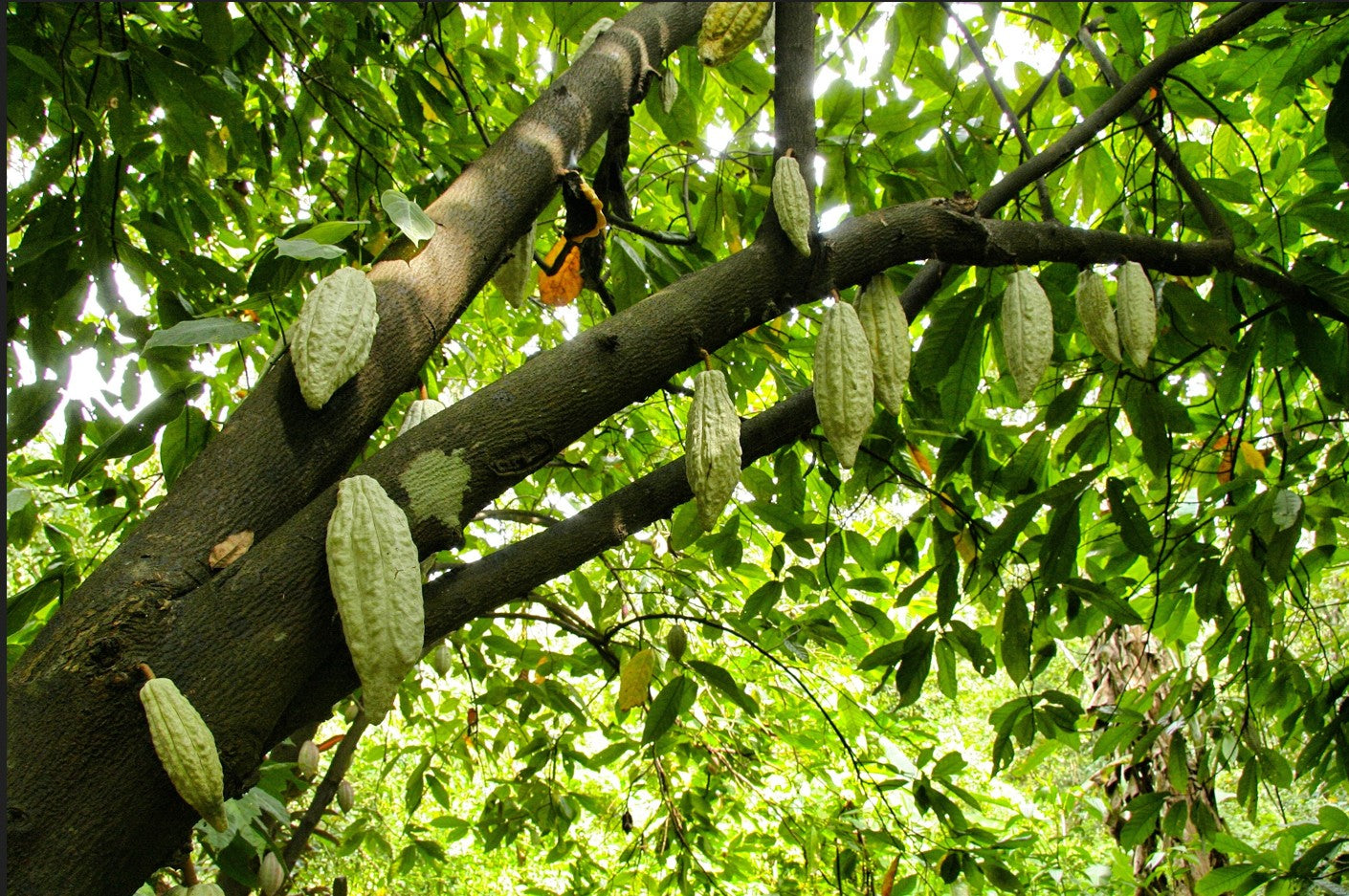
The cocoa fruit is the most valuable part of the plant because it provides the cacao used as the basis for chocolate production. It consists of:
- Skin: Thick and leathery, with a rough surface and a colour ranging from green to red and brown, depending on the stage of ripeness. Its main function is to protect the fruit.
- Pulp: Gelatinous, whitish and grainy, with a slightly acidic and sweet flavour and citrus notes. Its taste is completely different from that of the cacao bean. The pulp helps the cacao seeds ferment.
- Cocoa beans: Each fruit contains between 20 and 50 seeds. The beans are protected by a thin membrane known as the seed coat. They have an oval, slightly flattened shape and a colour ranging from white to black, brown and purplish shades. They are rich in fatty acids and valuable compounds, including theobromine.
It is worth taking a closer look at the uses of the cocoa fruit. Local communities mainly use the pulp to prepare beverages and food products. It is also an excellent ingredient for ice cream and juices.
Unlike the pulp, which can generally only be used fresh, cocoa beans can undergo a variety of processes, starting with fermentation and drying.
Cocoa bean shells are also used to produce animal feed, fertilisers and fuel.
Where Is Cocoa Grown Today?
The cocoa tree has several characteristics in common with the coffee plant. Both are cultivated in the tropical belt, in fertile soils and under the following conditions:
- mild temperatures;
- frequent rainfall;
- a balance of sunlight and shade.
Today, cocoa is mainly grown in the following regions:
- the upper Amazon region, including Peru, Colombia, Ecuador, Venezuela and Brazil;
Mexico; - several African countries, particularly Côte d’Ivoire and Ghana;
- to a limited extent, parts of Asia.
According to Altromercato, Côte d’Ivoire, Ghana and Ecuador “together produce approximately 65% of the world’s cacao.”
Interesting Facts and Ancient Cocoa Rituals
The spread of cocoa in the Western world would not have been possible without the work of a Dutch chemist who lived during the nineteenth century.
In 1828, Koenraad van Houten succeeded in extracting cocoa powder, making it easier to market because it could be transported more efficiently. He developed and patented a pressing process for roasted cocoa beans.
The first chocolate bar was created by Swiss chocolatier Daniel Peter in 1875. He was the first to introduce milk chocolate, which helps explain why Switzerland became such a leading country in the chocolate industry.
Switzerland also holds another record: with almost 9 kg consumed per person, it is the world’s largest per-capita consumer of cocoa. The world’s leading cocoa producer, however, is Côte d’Ivoire, which produces approximately 1.5 million tonnes.
The tradition of giving chocolate as a gift was already common among the Aztecs. Like the Maya, they considered chocolate to be the food of the gods. For this reason, one ancient ritual involved presenting chocolate as a wedding gift.
Finally, here is one entirely Italian curiosity. The famous Venetian seducer Giacomo Casanova was reportedly particularly fond of chocolate, which he described as an “elixir of love,” preferring it to champagne. After all, cacao has long been attributed with aphrodisiac properties...
Blog posts
The Cocoa Plant: History, Fruit, Cultivation and Interesting Facts
The cocoa plant, whose scientific nam...
Read more